
Transitions: co-production and supporting care leavers
Written by Dr Flossie Caerwynt, edited by Dr Kat Deerfield and Dr Grace Krause
March 2026
Co-production in social care means professionals and people who access care and support work together to design and run services. It’s a core concept in Welsh social care legislation.
Co-production can improve outcomes for young people transitioning to adulthood.
Some people who work in or access social care say that they find co-production difficult to understand. This can make it difficult to put into practice.
In this evidence summary, we explore what research says about how co-production can help to improve care leavers’ experiences during their transition to adulthood.
Introduction
Young people accessing social care face many challenges when they reach adulthood. The transition out of care typically happens very abruptly after young people turn 18 (Atkinson and Hyde, 2019). Young people living in the family home can take on adult responsibilities gradually, but care leavers often don’t have enough time to adjust to adult life. Instead, they may experience what some researchers call ‘instant adulthood’ (Alderson et al., 2022).
The speed of this shift from care to independence means that young people can be unprepared, which can make them vulnerable.
Care leavers are more likely than other young people to experience:
- mental illness
- loneliness
- poor overall well-being
- homelessness
- sexual exploitation
- social exclusion
- young parenthood
- contact with the criminal justice system
- lower academic achievement
- fewer stable employment opportunities.
(Alderson et al., 2022; Atkinson and Hyde, 2019; Everson-Hock et al., 2011; Feather et al., 2023; Harder et al., 2020)
Support available to care leavers
Care leavers usually have less family support than other young people. They also tend to lose access to support from services over the course of the transition. This can damage their well-being and make them less prepared for adulthood.
How young people feel supported by social care services also has an impact on how smooth the transition to adulthood is. Care leavers in several studies report not being listened to by professionals (Alderson et al., 2022; Atkinson and Hyde, 2019). This can make young people mistrust professionals, which in turn makes it harder for them to form positive relationships (Alderson et al., 2022; Atkinson and Hyde, 2019).
Improving care leaver transitions
Feather et al. (2023) show that successful transitions for care leavers need three things:
- robust social policy
- commitment to promoting social, emotional, and material support
- relationship based practices built on a commitment to reduce the challenges faced by care leavers.
1. Robust social policy
Feather et al.’s review shows that research indicates that improvements to the transition process need to be supported by policy and guidance. Having this in place can help make transitions as successful as possible and prevent the process from being improperly handled (2023).
2. Commitment to promoting social, emotional, and material support
Making sure that young people’s involvement is prioritised during planning and decision making is helpful (Liabo et al., 2017). Harder et al. (2020) show that it’s important to support care leavers’ independence and make sure that they are listened to. Failure to support independence can lead young people to become frustrated or angry, as well as leaving them unprepared for adult life.
3. Relationship based practices
Relationship based practices help everyone involved in the transition process to access the support they need. These practices can provide a way to balance giving young people responsibility and accountability while also making sure they have access to support and advice (Feather et al., 2023). Liabo et al.’s (2017) research on care leavers’ experiences shows that personalised support can improve outcomes. Strong relationships promote resilience in young people, making it easier for them to cope with change (Harder et al., 2020).
Relationships which allow all voices to be heard are important to both co-production and transitions. This means that co-production can address some of the problems care leavers face (Alderson et al., 2022). For example, co-production can lessen care leavers’ anxiety by giving them more control over the transition (Feather et al., 2023).
We discuss the importance of relationships in transitions later in this evidence summary.
Defining co-production
Co-production can be difficult to understand. It’s been described as a ‘slippery, woolly and muddled concept’ that’s used to describe many different things (Masterson et al., 2022). At its heart, co-production is when services are designed and run by staff and citizens working together equally.
For care leavers this means giving young people and professionals the same amount of control over decisions made during the transition. There are reasons why this isn’t always a realistic goal, which we’ll explore in more detail in this evidence summary. Other terms, which are sometimes used alongside (or instead of) co-production include:
- co-design – where power for making decisions about designing and allocating services and resources is shared with people who access care (SCIE, 2022; Slay and Stephens, 2013)
- co-delivery – where people who access care (ideally those who have taken part in co-design) are involved in running the service (SCIE, 2022; Conquer et al., 2024)
- co-evaluation – when people who access care are involved in evaluating and reviewing services (SCIE, 2022).
These were once treated as separate activities, which could be done as well as (or instead of) co-production. Now they are recognised as different parts of co-production (SCIE, 2022). For clarity we use the term ‘co-production’ throughout this summary, except where clearly specified in the evidence.
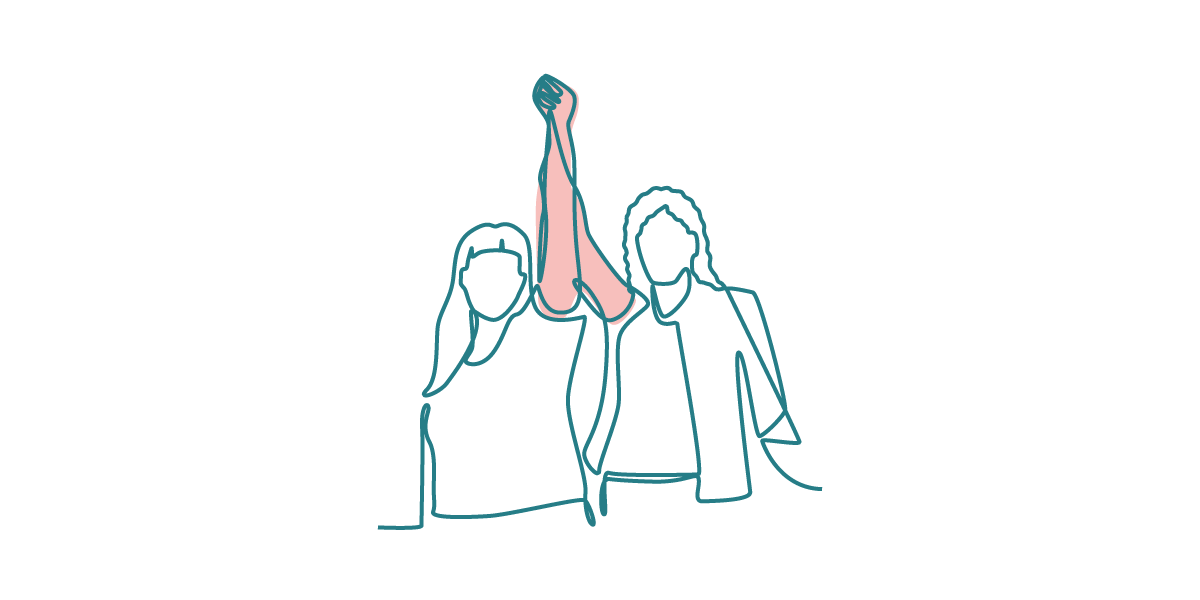
Co-production is when services are designed and run by staff and citizens working together equally
Co-production in legislation
Children’s right to take part in decision making processes that affect them is protected by Article 12 of the United Nation’s Convention on the Rights of the Child (UNCRC). This means that there’s a legal obligation for social care services to include young people when planning for their transition out of care. Young people must be allowed to voice their opinions, and their opinions must be taken seriously by decision makers (Davies et al., 2019).
In Wales, an obligation to involve people who access care in service design and delivery is part of the Social Services and Well-being (Wales) Act 2014. The Act’s Codes of Practice say that co-production is essential to fulfilling this obligation.
But while co-production is essential to legislation in Wales, it’s not always clear what this means. The impact of the Social Services and Well-being (Wales) Act 2014 has been evaluated several times since its introduction. These evaluations show that both people accessing and delivering social care struggle to understand the way co-production is defined in the Act (Andrews et al., 2023). People report feeling confused about exactly how they are meant to co-produce services (Andrews et al., 2023). The final report on these evaluations concluded that the Act is not clear about how co-production differs from other forms of partnership working (Llewellyn et al., 2023). As a result, many projects may have been described as having been ‘co-produced’ when this wasn’t actually the case (Llewellyn et al., 2023).
The values and principles of co-production
What co-production looks like varies depending on the people and organisations involved. Because of this, it can be helpful to focus on the values and principles that co-production is built on (Masterson et al., 2022).
The Social Care Institute for Excellence (SCIE) base their guidance for co-production on four main values (2022):
- equality – acknowledging that everyone brings strengths to co-production and everyone’s input should be valued equally
- diversity – being as proactive about inclusion and diversity as possible so that everyone can take part equally
- accessibility – accounting for different access needs throughout the process, for example, making sure that physical space and communication are accessible
- reciprocity – making sure that people receive something back from taking part.
For co-production to demonstrate all four values, power needs to be balanced equally between everyone involved. This must be a deliberate part of the co-production process (Bouvaird, 2007; Farr, 2018). We’ll return to how this might be achieved later in this summary.
Equality in co-production
Co-production helps people collaborate and make decisions together. In theory, equality is always the goal for co-production, but it can be difficult to achieve. There are many reasons why people might not be able to take part in co-production equally. It can be difficult to get everyone together in the same place at the same time because of other commitments, ill health and so on (Flinders et al., 2016). Some people may need support to understand research terminology or boost their confidence when interacting with services. Professionals may need training to build equal relationships with other co-production participants (Farr et al., 2021). Safety restrictions can also prevent equal participation, such as when two of the people involved have restricted access to one another. This can be a major challenge when working with care-experienced young people, who are more likely to have restricted access to family members (Jackson et al., 2020).
Many barriers can be addressed by working with people involved in co-production and thinking about their needs during the process. But the power dynamic between children or young people and adults is complicated. Not much research has looked at co-production’s ability to even out this imbalance (Kiili et al., 2021; Lundy, 2011). Because of this, most of the research discussed in this summary looks at how co-production can recognise and respond to differences in power.
Challenges of putting co-production into practice
Good co-production can improve social care. However, it’s difficult to know what good co-production looks like, as it varies a lot in different situations.
Some practical things also make co-production challenging to put into practice. These can include:
- costs (time, money, resources)
- clashing with standards set out in policy or legislation (Farr, 2018).

Dixon and Ward (2017) describe some challenges in a co-produced housing project for care leavers. The original plan to involve young people under 18 in a housing co-operative faced legal barriers. In cases like this it may not be possible to use co-produced recommendations, or at least not without substantial changes. These situations must be dealt with carefully. If projects are described as co-produced without properly responding to the ideas created by everyone, it can give a false impression of equality (Farr, 2018; Chen et al., 2024).
Co-producing services with young people has its own unique challenges. Professionals must learn to work collaboratively with young people, instead of taking their usual role as decision making experts (Fern, 2014). This mindset shift can be difficult for everyone. For example, Heron and Steckley (2020) led a co-produced initiative to improve young people’s representation at decision making forums in Scotland. This project involved social care workers and young people in residential care. They found that adults struggled to understand how to contribute without taking control. However, young people also found it difficult not to view the professionals as the ones with the ‘answers’. One young person said:
‘[i]t was confusing, no one has ever done it before and you didn’t know how to work’ (Heron and Steckley, 2020).
Professional knowledge versus people with lived experience
One of the biggest challenges of co-production is being comfortable moving outside of accepted ideas about best practice. In co-production processes, people who access care have gained knowledge through first-hand experiences. Professionals involved in the process will have knowledge through qualifications and training, as well as their experiences in practice. Knowledge gained through qualifications is often seen as more valuable than lived experience (Rose and Kalathil, 2019; Turnhout et al., 2019). This means that when the purpose of co-production is to find the “best” course of action, practitioners can hold more power than people who access care and support (Turnhout et al., 2019).
It’s important to be aware of this bias and find ways to address it during co-production processes. This helps to make sure that power is distributed as evenly as possible. One way to achieve this is by embedding reflective practices into co-production. Giving space to talk through individual power positions and biases at the start and throughout the co-production process may also be helpful as power dynamics change constantly (Farr, 2018; Rose and Kalathil, 2019; Ärleskog et al., 2021).
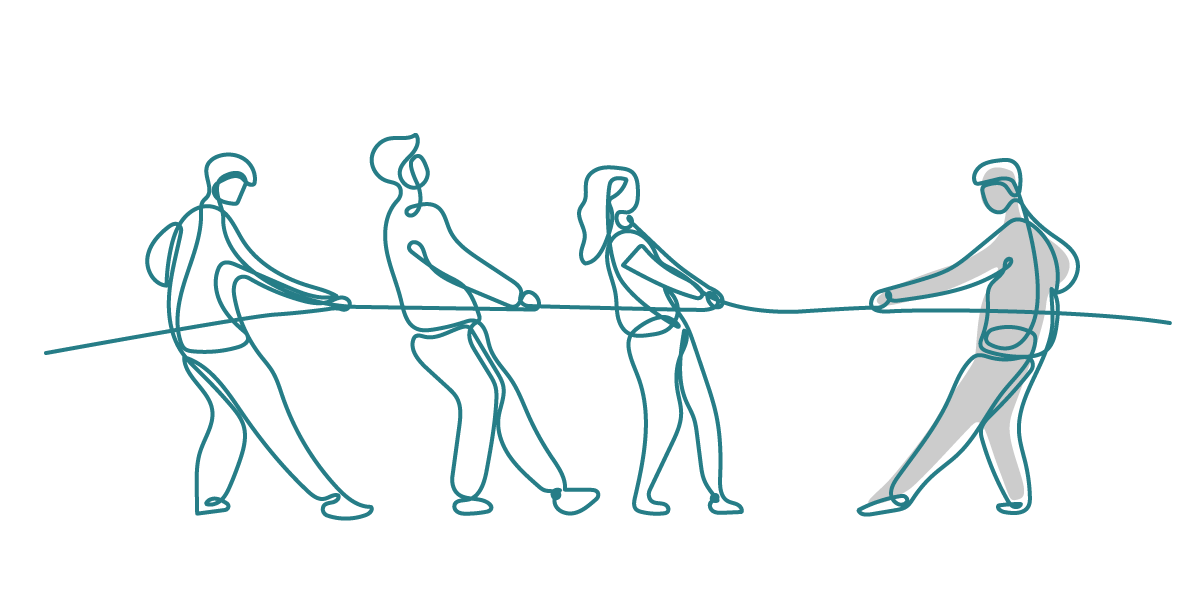
It's important to be aware of the power dynamics between individuals. Talking about position and bias at the start and throughout the process can be valuable
Changing perceptions of young people
Care-experienced young people have first-hand insight into how well care services meet their needs (Kiili et al., 2021; Fern, 2014). Despite this, their knowledge isn’t valued as much as professional knowledge. This is partly because adults often struggle to understand young people’s knowledge and thought processes. Adults can interpret children and young people’s behaviour as irrational, leading to assumptions that they’re unable to make informed decisions (Davies et al., 2019). Fern (2014) carried out research with young people who had resisted social workers’ interventions. The findings showed that disengagement was often a response to unhelpful interactions with social workers in the past. This highlights the importance of listening to young people’s perspectives and preferences.
Many social care workers believe that children and young people are inherently vulnerable and in need of adult care and protection. This belief is reinforced by social care legislation, which stresses the need to protect young people (Jackson et al., 2020). But while safeguarding is important, it can also restrict young people’s participation in co-production. Professionals might try to protect young people from too much stress or responsibility, but this can undermine their confidence and limit their involvement in decision making (Davies et al., 2019). It’s important that young people can take control over their lives and engage in positive risk taking during the transition to adulthood. More information about positive risk taking can be found in our evidence summary on Supporting people to make decisions about their care.

Young people transitioning to adulthood benefit from having control over their care
Viewing young people as less competent than adults complicates transition (Kiili and Larkins, 2016). Even when young people are nearly adults, there can be a lingering belief that they lack the knowledge needed to make serious decisions. For example, some of the adults involved in Dixon and Ward’s (2017) co-produced housing project argued that important decisions should be made without young people’s involvement. This argument risks reinforcing the idea that adult or professional knowledge is more valuable (Dixon and Ward, 2017; Fern, 2014).
Professionals may worry that youth-designed services will be unsuitable because too much weight is given to opinions and decisions that may be less well-informed. The fear is that as well as damaging service provision, this could negatively impact young people’s well-being in the long run if they experience poorer care (Kiili et al., 2021).
Co-production can create ideas that are significantly different from what is considered best practice. This means that sometimes the most appropriate course of action according to practitioners may not be the best choice for people accessing care and support (Heron and Steckley, 2020).
Young people’s wishes may be disregarded in favour of what professionals believe is in their best interests because they’re seen as lacking competence or knowledge (Davies et al., 2019).
Sometimes, because children are seen as inseparable from their families, parents are listened to more readily than young people (Kiili et al., 2021). This can be a problem for young people transitioning to adulthood as they benefit from the experience of taking control over their own care.
Co-production and gradual transitions
It’s important that young people can increase their involvement in decision making at a pace that feels comfortable for them. In the context of care leavers, this helps prepare them to take on adult responsibilities when the time comes (Liabo et al., 2017). This results in better outcomes than the kind of abrupt ‘instant adulthood’ discussed earlier (Alderson et al., 2022). A young person involved in a co-production project with care leavers in England describes how the process supported their transition into adulthood:
‘It has increased my confidence immensely. I have come to realise that my voice is just as valuable as my peers. It has made me realise that I create change now rather than waiting for someone else to do it. It has also made me feel connected to other cultures because no matter where another person is from I know that I'll always find something in common with them. It has generally enhanced my debating, critical thinking, leadership and problem-solving abilities, which I will carry with me for the rest of my life’ (Dixon et al. 2019).
Co-production can help improve outcomes by giving young people the opportunity to shape real change and create a transition system which works for them.
Co-production and relationships during transitions
Care leavers need strong support networks to navigate the transition successfully. Care leavers say that they like having access to flexible support to help them manage their transition (Atkinson and Hyde, 2019; Liabo, et al., 2017). They also report that they dislike relying on professionals to make decisions. Young people would prefer if professionals could act as facilitators (Atkinson and Hyde, 2019). Strong relationship based practices are needed for this to work (Feather et al., 2023).
Co-production can help care leavers to develop support networks while learning the skills they need to maintain these relationships. Young people may struggle to maintain support networks when they do not feel listened to, or if they are not able to have their basic needs met. This means that professionals need to take care leavers’ concerns seriously and be prepared to give unconditional support during the transition in order to ensure a positive outcome (Atkinson and Hyde, 2019).

Ideally, co-production should include everyone involved with the transition who would like to take part (including care leavers’ families and/or friends). This helps young people to develop their support network (Alderson et al., 2022). If the challenges of co-production can be overcome by building trust and working to redistribute power, the benefit to young people can be immense. Jackson et al. (2020) report the sense of empowerment that young people experienced from improved participation in the foster care system. One participant in this project reported how:
‘Literally [...] I feel like a Superhero when I come in here because people listen to us […] we feel […] we’re getting somewhere like. One day we’ll make a change.’
More information on the importance of relationships during the move to adult care can be found in our evidence summary on Transitions: perspectives of young people and their families.
Conclusion
This evidence summary shares recent research on how co-production can improve the experiences of young people leaving care. It discusses the challenges that need to be addressed for co-production to be effective. These challenges include lack of value placed on young people’s knowledge, the idea that they can’t make serious decisions, and the lack of trust they may feel towards professionals.
Research shows that there are ways that co-production can respond to these challenges. This can include addressing power differences, making sure that young people are taken seriously, and developing strong relationships during transition. Good co-production can tackle existing problems in the move out of care. It reduces the chances of poor outcomes for care leavers by giving them control over decision making, helping to build a support network, and providing opportunities to develop adult skills.
Additional reading
Here is a list of the five most relevant resources to co-production and care leavers that are either open access or freely available on the NHS Wales e-Library.
- Alderson, H., Smart, D., Kerridge, G., Currie, G., Johnson, R., Kaner, E., Lynch, A., Munro, E., Swan, J., and McGovern, R. (2022) ‘Moving from ‘what we know works’ to ‘what we do in practice’: An evidence overview of implementation and diffusion of innovation in transition to adulthood for care experienced young people’, Child & Family Social Work, 28 (3), pp. 869-896, doi:10.1111/cfs.12998.
- Atkinson, C. and Hyde, R. (2019) ‘Care leavers’ views about transition: a literature review’, Journal of Children’s Services, 14 (1), pp. 42-58, doi:10.1108/JCS-05-2018-0013.
- Farr, M. (2018) ‘Power dynamics and collaborative mechanisms in co-production and co-design processes’, Critical Social Policy, 38 (4), pp. 623-644, doi:10.1177/0261018317747444.
- Kiili, J., Itäpuisto, M., Moilanen, J., Svenlin, A. and Malinen, K.E. (2021) ‘Professionals’ views on children’s service user involvement’, Journal of Children’s Services, 16 (2), pp. 145-158, doi:10.1108/JCS-10-2020-0069.
- SCIE (2022) Co-production: What it is and how to do it, London: Social Care Institute for Excellence, available at https://www.scie.org.uk/co-production/what-how/ (accessed: 11 February 2026).
References -
Alderson, H., Smart, D., Kerridge, G., Currie, G., Johnson, R., Kaner, E., Lynch, A., Munro, E., Swan, J., and McGovern, R. (2022) ‘Moving from “ what we know works” to “what we do in practice”: An evidence overview of implementation and diffusion of innovation in transition to adulthood for care experienced young people’, Child & Family Social Work, 28 (3), pp. 869-896, doi:10.1111/cfs.12998.
Andrews, N., Calder, G., Blanluet, N. and Baker, R. (2023) Co-production: Research to support the Final Report of the Evaluation of the Social Services and Well-being (Wales) Act 2014, Cardiff, Welsh Government, GSR report number 38/2023, available at https://www.gov.wales/sites/default/files/statistics-and-research/2023-03/co-production-research-to-support-the-final-report-of-the-evaluation-of-the-social-services-and-well-being-wales-act-2014.pdf (accessed: 11 February 2026).
Ärleskog, C., Vackerberg, N. and Andersson, A. (2021) ‘Balancing power in co-production: introducing a reflection model’, Humanities and Social Sciences Communications, 8 (108), pp. 1-7, doi:10.1057/s41599-021-00790-1.
Atkinson, C. and Hyde, R. (2019) ‘Care leavers’ views about transition: a literature review’, Journal of Children’s Services, 14 (1), pp. 42-58, doi:10.1108/JCS-05-2018-0013.
Bouvaird, T. (2007) ‘Beyond Engagement and Participation: User and Community Coproduction of Public Services’, Public Administration Review, 67 (5), pp. 846-860, doi:10.1111/j.1540-6210.2007.00773.x.
Conquer, S., Iles, R., Windle, K., Heathershaw, R. and Ski, C.F. (2024) ‘Transforming Integrated Care Through Co-production: A Systematic Review Using Meta-ethnography’, International Journal of Integrated Care, 24 (1), pp. 1-15, doi:10.5334/ijic.7603.
Chen, Y., Croft, C. and Currie, G. (2024) ‘Leveraging normative power in co-production to redress power imbalances’, Public Administration, 103 (1), pp. 1-17, doi:10.1111/padm.13015.
Davies, C., Fraser, J. and Waters, D. (2019) ‘Establishing a framework for listening to children in healthcare’, Journal of Child Health Care, 27 (2), pp. 279-288, doi:10.1177/1367493519872078.
Dixon, J. and Ward, J. (2017) Making a House a Home: The House Project Evaluation, Department for Education: Children’s Social Care Innovation Programme Evaluation, available at https://dera.ioe.ac.uk/id/eprint/28513/ (accessed: 29 January 2026).
Dixon, J., Ward, J. and Blower, S. (2019) ‘“They sat and actually listened to what we think about the care system”: the use of participation, consultation, peer research and co-production to raise the voices of young people in and leaving care in England’, Child Care in Practice, 25 (1), pp. 6-21, doi:10.1080/13575279.2018.1521380.
Everson-Hock, E.S., Jones, R., Guillaume, L., Clapton, J., Duenas, A., Goyder, E., Chilcott, J., Cooke, J., Payne, N., Sheppard, L.M. andSwann, C. (2011) ‘Supporting the transition of looked-after young people to independent living: a systematic review of interventions and adult outcomes’, Child: care, health and development, 37 (6), pp. 767-779, doi:10.1111/j.1365-2214.2011.01287.x.
Farr, M. (2018) ‘Power dynamics and collaborative mechanisms in co-production and co-design processes’, Critical Social Policy, 38 (4), pp. 623-644, doi:10.1177/0261018317747444.
Feather, J., Allen, D., Crompton, R., Jones, Z., Christiansen, A. and Butler, G. (2023) ‘Transitional support interventions for care leavers: A scoping review’, Children & Society, 38 (5), pp. 1579-1601, doi:10.1111/chso.12825.
Fern, E. (2014) ‘“Grown-ups Never Understand Anything by Themselves”’, Practice: Social Work in Action, 26 (1), pp. 3-22, doi:10.1080/09503153.2013.867940.
Flinders, M.V., Wood, M. and Cunningham, M. (2016) ‘The politics of co-production: Risks, limits and pollution’, Evidence and Policy, 12 (2), pp. 261-279, doi:10.1332/174426415X14412037949967.
Harder, A., Mann-Feder, V., Oterholm, I. and Refaeli, T. (2020) ‘Supporting Transitions to Adulthood for Youth Leaving Care: Consensus Based Principles’, Children and Youth Services Review, 116, doi:10.1016/j.childyouth.2020.105260.
Heron, G. and Steckley, L. (2020) ‘Digital storytelling using co-production with vulnerable young people’, Journal of Social Work, 20 (4), pp. 411-430, doi:10.1177/1468017318814993.
Jackson, R., Brady, B., Forkan, C., Tierney, E. and Kennan, D. (2020) ‘Influencing policy and practice for young people in foster care: Learning from a model of collective participation’, Children and Youth Services Review, 113, doi:10.1016/j.childyouth.2020.104901.
Kiili, J. and Larkins, C. (2016) ‘Invited to labour or participate: intra- and inter-generational distinctions and the role of capital in children’s invited participation’, Discourse, 39 (3), pp. 408-421, doi:10.1080/01596306.2016.1274290.
Kiili, J., Itäpuisto, M., Moilanen, J., Svenlin, A. and Malinen, K.E. (2021) ‘Professionals’ views on children’s service user involvement’, Journal of Children’s Services, 16 (2), pp. 145-158, doi:10.1108/JCS-10-2020-0069.
Liabo, K., McKenna, C., Ingold, A. and Roberts, H. (2017) ‘Leaving foster or residential care: a participatory study of care leavers’ experiences of health and social care transitions’, Child: care, health and development, 43 (2), pp. 182-191, doi:10.1111/cch.12426.
Llewellyn M., Verity F., Wallace S., Calder G., Garthwaite T., Lyttleton-Smith J. and Read S. (2023) From Act to Impact? Final Report of the Evaluation of the Social Services and Well-being (Wales) Act 2014, Cardiff, Welsh Government, GSR report number 36/2023, available at https://www.gov.wales/sites/default/files/statistics-and-research/2023-03/from-act-to-impact-final-report-of-the-evaluation-of-the-social-services-and-well-being-wales-act-2014.pdf (accessed: 11 February 2026).
Lundy, L., McEvoy, L. and Byrne, B. (2011) ‘Working With Young Children as Co-Researchers: An Approach Informed by the United Nations Convention on the Rights of the Child’. Early Education and Development, 22 (5), pp. 714-736, doi:10.1080/10409289.2011.596463.
Masterson, D., Areskoug, K., Robert, G., Nylander, E. and Sjellström, S. (2022) ‘Mapping definitions of co-production and co-design in health and social care: A systematic scoping review providing lessons for the future’, Health Expectations, 25 (3), pp. 902-913, doi:10.1111/hex.13470.
Rose, D. and Kalathil, J. (2019) ‘Power, Privilege and Knowledge: the Untenable Promise of Co-production in Mental “Health”’, Hypothesis and Theory, 4 (57), doi:10.3389/fsoc.2019.00057.
SCIE (2022) Co-production: What it is and how to do it, London, Social Care Institute for Excellence, available at https://www.scie.org.uk/co-production/what-how/ (accessed: 11 February 2026).
Slay, J. and Stephens, L. (2013) Co-production in mental health: A literature review, London: New Economics Foundation, available at https://new-economicsf.files.svdcdn.com/production/files/ca0975b7cd88125c3e_ywm6bp3l1.pdf (accessed: 11 February 2026).
Social Services and Well-being (Wales) Act 2014, available at https://www.legislation.gov.uk/anaw/2014/4/resources (accessed: 11 March 2026).
Turnhout, E., Metze, T., Wyborn, C., Klenk, N. and Louder, E. (2019) ‘The politics of co-production: participation, power, and transformation’, Current Opinion in Environmental Sustainability, 42, pp. 15-21, doi:10.1016/j.cosust.2019.11.009.
United Nations Convention on the Rights of the Child, available at https://www.unicef.org.uk/wp-content/uploads/2016/08/unicef-convention-rights-child-uncrc.pdf (accessed: 11 March 2026).