In this blog Rachel Scourfield, our Head of Knowledge Mobilisation, shares her reflections on the first Rhondda Cynon Taf Health Determinants Research Collaboration (HDRC) conference in March.
Explanation of terms
Health determinants refer to how our health is influenced by many factors, including our behaviours, income, education, living conditions and environment.
When these are unevenly distributed, they can create unfair differences in health between communities.
Partners, researchers, community members and decision makers came together at the Rhondda Heritage Park Hotel for a day of discussion and inspiration and to celebrate the achievements of the HDRC to date.
The day was hosted by a remarkable line-up including Paul Mee, Professor Kerry Hood, Ben Lewing, Marie Brousseau-Navarro, Zack Scott, Professor Dan Bristow, Simon James, Philip Daniels, Louise Davies, Professor Alisha Davies, and Professor Rhiannon Evans.
The theme for the day was clear: we make the biggest impact when we work together. Throughout the inspiring agenda of speakers and discussions, that message echoed again and again.
Background
In October 2023, Rhondda Cynon Taf (RCT) became one of two councils in Wales to secure a £5 million, five‑year award from the National Institute of Health and Care Research (NIHR). The aim was to embed a research culture inside the local authority so that decisions could be informed by evidence, data and local insight.
The HDRC is a collaboration between RCT Council, Cardiff University, Cwm Taf Morgannwg University Health Board, Interlink RCT and Public Health Wales.
Understanding the challenges
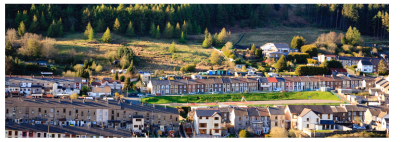
Council Chief Executive Paul Mee grounded the day in the reality of life in his local authority: economic inequality, high rates of chronic ill-health, declining skills, and environmental challenges such as flooding and climate resilience.
"To continue doing what councils have previously done is no longer financially possible and no longer meets the changing needs of the community." - Paul Mee
How did HDRC support change in RCT?
Throughout the day people reflected on how collaboration takes time but is the most powerful driver of sustainable change.
Ben Lewing, Director of Making Evidence Work, captured this perfectly when he said:
"Democracy brings us all together. It can be slow – but when we speed things up, we go alone."
The HDRC built relationships across all levels of the council and throughout the community, becoming a presence at all meetings and offering support, information and skills.
Celebrating key achievements
Working together through HDRC has resulted in several important developments within the local authority.
Mapping preventative spend
Preventative spend means investing early to reduce the need for higher‑cost services later on. It helps public bodies use limited resources more effectively, while reducing health inequalities and improving outcomes.
HDRC has partnered with the council, the Office of the Future Generations Commissioner and the Chartered Institute of Public Finance and Accountancy (CIPFA) to carry out pioneering work in this area.
Marie Brousseau‑Navarro, Deputy Future Generations Commissioner, described preventative spend in three stages:
- primary: this approach looks to address imbalances across the whole population. An example of this would be providing cycle tracks or running public health campaigns.
- secondary: this is when a group or section of the community is identified as being at future risk. Spend and focus at this stage prevents escalation. For example, this would include the child poverty work carried out by the HDRC and the council.
- tertiary: this stage is when the crisis is happening but focus is placed on reducing harm. For RCT this could include the Magu project supporting families at risk of having a child removed.
Child poverty: working 'with', not 'for', communities
HDRC has also helped expand the council’s Child Poverty Group into a vibrant, cross‑sector collaboration rooted in lived experience.
Lived Experience Advisor Ceri-Lynne Higgins reminded us:

"People in communities want to be part of the solution, not seen as just part of the problem."
Together, the group produced a report that highlights 18 recommendations for action that are all supported by evidence. These recommendations are helping to shape the approach of the council.
One of the recommendations was to develop coordinated and dignified support for essential family needs. Academic evidence suggests that cash-first approaches are effective in tackling poverty, with lived experience evidence highlighting the role of interpersonal relationships in accessing support.
Key takeaways
The important messages that I took from the day were:
- real change requires everyone at the table
- evidence and data need ongoing investment
- collaboration helps uncover the real issues
- identifying problems is easy – fixing them is a lot harder.
As the day closed, it was clear that the HDRC is not just a funded project but a growing movement. Through this work, RCT can use evidence to identify positive impacts and future areas of work.
Post-funding, the plan is for the embedded HDRC culture to continue to drive smarter decisions, stronger communities, and fairer health outcomes.